
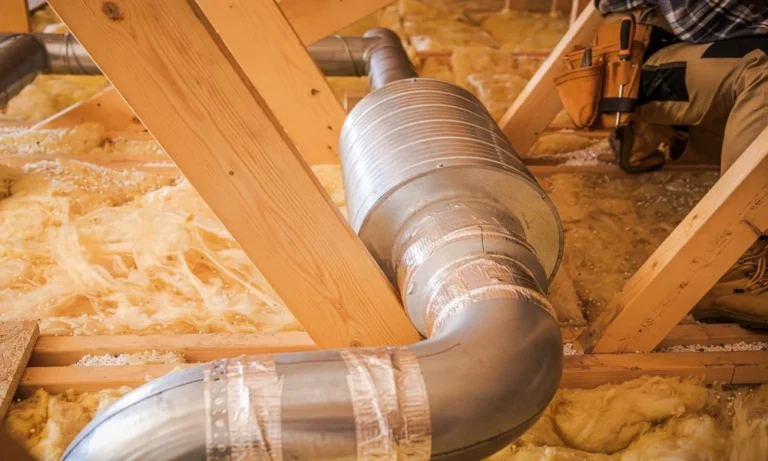
Most people judge their heating and cooling by the equipment they can see: the thermostat on the wall, the furnace in the closet, the condenser humming outside. Yet some of the biggest comfort problems come from something nobody sees at all. Behind the walls, above the ceilings, and under the floors runs a network of sheet metal channels that carries conditioned air to every room. When that network is well designed and sealed, a home feels even and quiet. When it is not, even a brand new system can leave you with hot bedrooms, noisy vents, and bills that keep climbing. Companies like SG HVAC SHEETMETAL LLC work in exactly this part of the system, where careful fabrication and installation make the difference between air that arrives and air that gets lost along the way.
Here is a closer look at how ductwork shapes your home and what to watch for.
What Ductwork Actually Does
Think of your HVAC equipment as the heart and your ducts as the blood vessels. The unit conditions the air, but the ducts decide where it goes, how fast it travels, and how much of it arrives. A system moves a certain volume of air, and the ducts must be sized to carry that volume without excess resistance. Too small, and air struggles through, creating noise and weak airflow. Too large, and air slows down, which can leave some rooms underserved.
The Main Parts of a Duct System
Knowing the vocabulary helps you follow a conversation with any contractor:
- Supply trunk. The large main channel that leaves the unit and feeds branches throughout the house.
- Branch runs. Smaller ducts that split off to individual rooms.
- Return ducts. The pathway that carries air back to the unit to be conditioned again.
- Registers and grilles. The visible openings where air enters or leaves a room.
- Dampers. Adjustable plates that help balance airflow between zones or rooms.
- Plenums. Boxes at the unit that connect it to the trunk lines.
Why Sheet Metal Matters
Metal ductwork is valued for its durability, smooth interior surface, and resistance to crushing. A smooth interior lets air flow with less friction, and rigid walls hold their shape over time. Custom fabrication matters, too. Homes rarely have perfectly standard spaces, so ducts often need to be built to fit around beams, tight attic corners, or unusual layouts. Well-made fittings with clean transitions reduce turbulence, which means less noise and better airflow.
Signs Your Ducts Are Holding Your System Back
Duct trouble often disguises itself as an equipment problem. Look for these clues:
- Some rooms are always warmer or cooler than others.
- Airflow from certain vents feels weak.
- Whistling, rattling, or booming sounds when the system starts or stops.
- Excess dust around registers or throughout the house.
- Energy bills that seem high for the size of your home.
- Visible gaps, disconnected sections, or crushed spots in accessible ducts.
Any of these can point to leaks, poor sizing, or damage somewhere in the network.
The Leak Problem
Leaky ducts are among the most common and least visible efficiency drains. Joints and seams that were not sealed properly, or that loosened over time, let conditioned air escape into attics, crawl spaces, and wall cavities. That air is wasted, and the system must run longer to make up the difference. Leaks can also pull dusty, humid air into the system. The U.S. Department of Energy explains how leakage and insulation affect performance in its guide to ducts and air distribution, which is a useful read if you are curious about how much conditioned air a typical home can lose.
Duct Care at a Glance
| Issue | Likely Cause | Typical Fix |
|---|---|---|
| Hot or cold rooms | Leaks, poor balancing, undersized branch | Sealing, rebalancing, resizing |
| Loud airflow noise | Restrictive fittings or high air speed | Adjust or replace fittings |
| Excess dust | Leaky returns or dirty ducts | Seal returns, clean system |
| High energy bills | Leakage or uninsulated runs | Seal and insulate |
| Weak airflow | Crushed or disconnected ducts | Repair or replace sections |
When Repair Is Enough and When Redesign Makes Sense
Small fixes such as resealing a loose joint or reconnecting a separated section can restore performance quickly. But if rooms have been added, equipment has been upgraded, or the original layout was never well planned, patching may not be enough. In those cases a redesign or partial replacement can bring the whole system back into balance. A good professional will measure airflow, inspect the trunk and branch layout, and explain what is causing the problem before recommending work.
Simple Things Homeowners Can Do
- Keep supply and return vents unblocked by furniture and rugs.
- Replace filters on schedule to protect airflow.
- Note which rooms have comfort problems and when they occur.
- Look at accessible ductwork in attics and basements for visible gaps or loose connections.
- Schedule periodic professional inspections, especially after renovations.
Avoid taping over damaged areas with ordinary cloth tape, since it dries out and fails. Proper sealing materials and methods exist for a reason.
Final Thoughts
Ductwork is the part of your HVAC system that most people never think about until something feels wrong. Yet it determines whether the air your equipment produces reaches the rooms where you live. Good design, quality fabrication, and tight sealing can improve comfort, quiet your home, and reduce wasted energy. If your house has uneven temperatures or unexplained noises, the answer may be hiding in the ducts rather than in the equipment.