
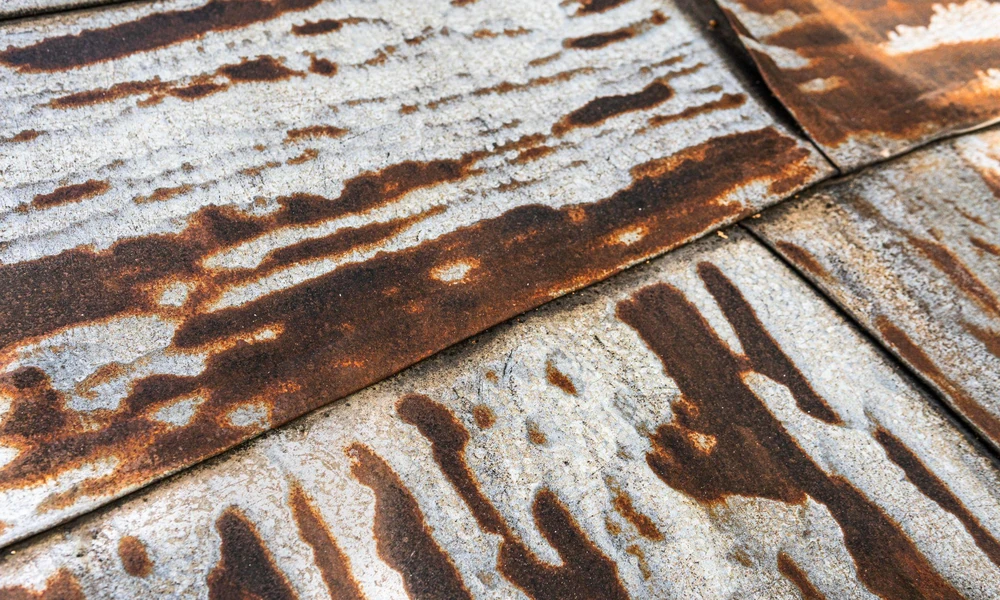
An industrial roof installed with a twenty-year expectation can look distinctly tired at year eight, and facility owners understandably wonder whether the original specification was inadequate. Usually it wasn’t. The roof is simply exposed to a combination of conditions that compound each other, and tropical industrial environments accelerate several degradation mechanisms at once. Understanding which factors are driving deterioration on a specific building helps determine whether localised repair will hold or whether metal roof waterproofing in Singapore needs to be addressed across the whole area.
1. Thermal Cycling and Daily Expansion Movement
Metal roofs heat substantially under direct sun and cool sharply during rain, producing expansion and contraction every single day. Over years, this cycling works fasteners loose, enlarges the holes they sit in, and fatigues sealants at laps and penetrations.
The result is rarely a dramatic failure. It shows up as gradually loosening fixings, weeping around fastener points during heavy rain, and sealant that has hardened and pulled away at joints. Because the movement is continuous, any repair that doesn’t accommodate it tends to fail in the same way the original detail did.
2. Sustained UV Exposure
Tropical UV intensity degrades protective coatings faster than temperate conditions do. Factory-applied finishes chalk, fade, and eventually thin to the point where the substrate beneath loses protection.
Once the coating has degraded, the metal is exposed to moisture directly and corrosion begins. Chalking visible as a powdery residue when a hand is wiped across the surface is an early indicator that the protective layer is nearing the end of its useful life, well before corrosion appears.
3. Rainfall Volume, Ponding, and Standing Water at Low Points
Heavy, frequent rainfall combined with shallow roof pitches produces water sitting at laps, behind roof-mounted equipment, and in areas where the roof has deflected slightly. Standing water is considerably more damaging than water that drains, since it maintains contact with the surface and penetrates any compromised coating.
Blocked gutters and debris accumulation worsen this, and on large industrial roofs these areas often go uninspected for years.
4. Industrial Atmospheric Exposure
Roofs near coastal areas take salt-laden air, and those near industrial processes may be exposed to chemical emissions, exhaust discharge, or particulate deposits. Both accelerate corrosion beyond what the same roof would experience inland in a clean environment.
Where a roof shows deterioration concentrated downwind of a stack or on the seaward elevation, atmospheric exposure is likely a significant contributor.
Comparing Repair Approaches Against Roof Condition
| Roof Condition | Localised Repair Suitable | Full Recoating Warranted |
| Isolated fastener leaks, coating intact | Yes, reseal and replace fixings | Not yet necessary |
| Widespread chalking, no significant corrosion | Limited value | Yes, while substrate is still sound |
| Corrosion at multiple locations | Only as interim measure | Yes, with corrosion treatment first |
| Ponding across several areas | Drainage correction needed alongside | Yes, with a system rated for standing water |
| Perforation or section loss | Not appropriate | Panel replacement before any coating |
Deciding Between Patching and Recoating
The practical threshold is whether deterioration is localised or general. A few leaking fasteners on an otherwise sound roof are a maintenance item. Widespread chalking, corrosion appearing in several unrelated locations, or repeated leaks in different areas indicate the protective system as a whole has reached the end of its life, and continuing to patch simply defers a larger job while the substrate degrades further.
Recoating with an elastomeric membrane is generally most effective while the metal is still structurally sound, since a coating applied over significant corrosion or perforation addresses the symptom rather than the condition. Facility owners planning roof waterproofing in Singapore are usually better served by a full condition survey than by responding to individual leaks, because the survey establishes whether the window for cost-effective recoating is still open or whether panel replacement has already become necessary in places.
Contact General Waterproofing & Service to arrange a condition survey of your industrial roof and determine whether recoating or localised repair is appropriate.

Comments are closed.