
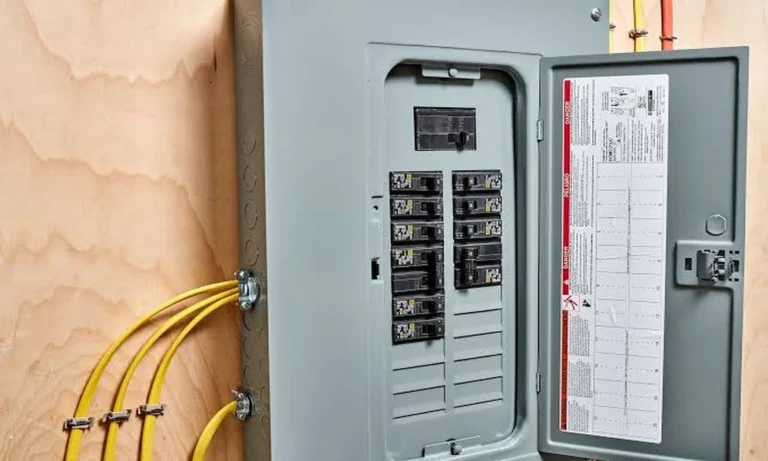
Your electrical panel is the quiet control center of your home. Every light, outlet, appliance, and air conditioner depends on it, and it rarely gets a second thought until something goes wrong. Many homeowners ask whether their panel is fine, aging, or a real safety concern. If you are weighing a panel replacement in Hillsborough County, this short self-assessment will help you organize what you see and decide what to do next. It is not a replacement for a professional inspection, but it will help you ask better questions.
How to Use This Quiz
Read each question and note how many you answer “yes” to. Never remove the panel cover yourself. That job belongs to a qualified electrician, and the inside of a panel can be dangerous even with the main breaker off.
Part One: What the Panel Is Telling You
1. Do breakers trip often, or does a fuse blow regularly?
Occasional trips can mean one overloaded circuit. Frequent power interruptions deserve a closer look. The Consumer Product Safety Commission (CPSC) lists as a warning sign that fuses need replacement or circuit breakers need resetting frequently.
2. Do lights dim or flicker when large appliances start?
Dimming when an air conditioner or dryer kicks on can point to an overloaded system or a poor connection.
3. Do you hear buzzing, sizzling, or crackling near the panel?
The CPSC includes unusual sounds from the electrical system, such as sizzles and buzzes, among its warning signs.
4. Do you notice a burning smell or warm spots on the panel?
According to the CPSC, burned or overheated wires often give off an odor of hot insulation, and parts of the system may be warm but should never be hot, painful to touch, or discolored from heat.
5. Have you ever seen sparks or flashes?
Arcing is never normal. Treat it as urgent.
If you answered yes to any question in this section, call a licensed electrician soon. If you smell burning or see smoke or sparks, turn off power if it is safe to do so, leave the area, and call emergency services.
Part Two: Age and History
6. Do you know when the panel was last inspected?
The CPSC explains that homes ranging from 40 to 100 years old in some investigated cases had not been inspected since they were built. The agency offers a simple guide: if your last inspection was 40 or more years ago, inspection is overdue, and if it was 10 to 40 years ago, inspection is advisable, especially if heavy electrical loads have been added or warning signs are present. Do not open the panel to check. A label or tag on the panel door or cover may show a date.
7. Is your home older, with a fuse box or a panel you have never seen updated?
Fuse boxes and very old panels were designed for a time with far fewer electronics and appliances.
8. Does the panel brand or model have a known history of problems?
Certain older panel brands have drawn safety concerns over the years. An electrician can identify your panel and tell you whether it needs special attention.
Part Three: Demand on the System
9. Have you added major loads since the panel was installed?
Examples include central air conditioning, an electric range, a hot tub, a workshop, an electric vehicle charger, or a home addition. The CPSC notes that inspection is especially advisable when substantial electrical loads have been added.
10. Are extension cords or power strips doing the work of missing outlets?
The CPSC warns against extension cords used permanently to extend home wiring instead of being used temporarily, and advises that you get a qualified electrician to install permanent wiring to extend your home system. A home that depends on extension cords may have outgrown its circuits.
Reading Your Score
- 0 to 1 yes answers: Your system may be in good shape. Still, schedule an inspection if it has been many years.
- 2 to 4 yes answers: Have a licensed electrician evaluate the panel and wiring. An upgrade may make sense, or targeted repairs may be enough.
- 5 or more yes answers, or any sparks, burning smells, or heat: Do not wait. Call an electrician promptly for an assessment.
Remember that the CPSC emphasizes that finding specific defects and repairing them are jobs for qualified electrical professionals. A quiz can point you toward a problem, but it cannot diagnose one.
What a Panel Replacement Usually Involves
Every home is different, but a typical project includes:
- Evaluation. The electrician reviews your current panel, service size, wiring, and electrical needs.
- Planning and permits. Panel work typically requires a permit and inspection through your local building department. Your electrician can explain what applies in your area.
- Coordination with the utility. Power must be disconnected and later reconnected safely, usually with the utility’s involvement.
- Installation. The old panel is removed and a new one is installed with properly sized breakers, wiring connections, and labeling.
- Safety devices. Many upgrades add protective features, such as arc fault and ground fault protection where appropriate. The CPSC explains that ground fault circuit interrupters turn electricity off when leakage current is detected, to prevent severe injuries or electrocution, while arc fault circuit interrupters are intended to address fire hazards.
- Inspection and testing. The work is inspected, the circuits are tested, and the panel is labeled clearly.
Questions to Ask Before You Hire
- Are you licensed and insured, and will you pull the permit?
- How did you decide what size panel I need?
- Will you add surge protection or other safety devices?
- What is the full price, and what is and is not included?
- How long will the power be off?
- What warranty covers the work?
Get written estimates, compare scope as well as price, and be cautious of anyone who pressures you to decide on the spot.
Everyday Habits That Protect Your Panel
- Do not replace a tripping breaker or fuse with a higher-rated one. The CPSC warns, do not put in a higher ampere fuse or circuit breaker, and obtain the help of a qualified electrician.
- Keep the area around your panel clear so it is accessible in an emergency.
- Test GFCI outlets monthly using the test and reset buttons.
- Install and test smoke alarms, and replace batteries on schedule.
- Spread large appliances across different circuits when possible.
- Schedule periodic electrical inspections, especially in older homes.
Final Thoughts
A panel is meant to protect your home quietly for decades, but it does not last forever, and modern homes ask far more of it than older ones did. Use this quiz to notice early warning signs, and bring any concerns to a licensed electrician before they turn into emergencies. The right upgrade at the right time protects your family and gives you the capacity to power your home for years to come.