
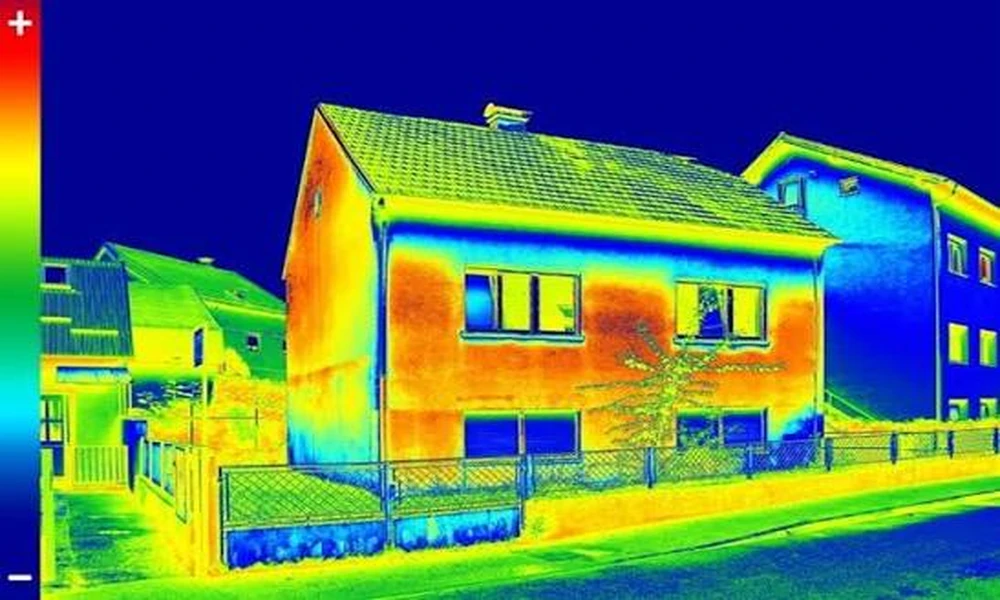
The best time for a thermal observation is determined by the inspection question and suitable conditions, not simply by when the camera is available. Direct sun can complicate interpretation of a building’s surface temperatures. Richmond Hill homeowners planning to investigate a concern should discuss timing with a qualified operator before treating a convenient afternoon rental as a useful survey window.
A sunny wall has its own recent history
Imagine two exterior walls on the same house. One has been exposed to direct sunlight, while the other has remained shaded. Their thermal appearances should not automatically be compared as though they had experienced identical conditions. An apparent difference could involve the environment as well as the building. A colourful image records a particular observation; it does not identify which influence produced the pattern.
FLIR’s guidance on building energy audits explains that solar loading can obscure potential issues, especially on sunlit sides of a building. It also identifies wind as a factor that can complicate observations. These are reasons to plan the inspection conditions carefully. They are not a universal rule that every building must be photographed at the same hour or after one fixed waiting period.
A photograph taken as a wall enters shade does not erase its earlier exposure. The operator needs to consider the conditions relevant to the intended assessment. An owner can help by describing which areas received sun, when the concern is usually noticed and what the recent weather was like. Do not invent a detailed temperature history; a truthful account of what is known is more useful than a precise-looking reconstruction.
The inspection purpose determines the useful conditions
Start by saying what decision the images are meant to support. An owner interested in a recurring comfort complaint has a different question from someone documenting a known repair or asking a specialist to investigate suspected moisture. The equipment may look similar across these tasks, but the conditions and supporting evidence may differ. “Take thermal pictures of the house” is too broad to establish whether the planned visit will answer anything.
Ask the person responsible for interpretation what they need from the site and weather. They may need information about the building’s heating or cooling state, access to particular areas or an observation at another time. Follow their instructions without making unapproved changes to systems. A household should not disable safety controls, interfere with ventilation or create unusual operating conditions merely to produce a more dramatic thermal pattern.
The operator should also be able to explain when the proposed observation will be inconclusive. That is a useful boundary, not a weakness in the service. If direct sun or other conditions prevent a reliable answer to the chosen question, recording that limitation is better than filling a report with images whose meaning remains uncertain. The number of pictures collected is not a measure of how well the concern was assessed.
Consider a homeowner worried about one upstairs room. A quick exterior image on a bright day might be interesting, but it may not explain why the room feels different at night. The more useful first step is to describe the timing and nature of the comfort problem to the assessor. That account can guide an inspection designed around the actual concern rather than around the view that happens to be easiest to photograph.
Book around an observation window, not a photo opportunity
Once the inspection purpose and suitable conditions are understood, arrange the equipment around that plan. Confirm who will use the camera, who will interpret the results and what happens if conditions change. If those roles belong to different people, establish the required file format and information before collection. Renting a tool does not automatically include the expertise or report needed to make a building decision.
Drying Equipment’s infrared-camera information for Richmond Hill provides a local category starting point for an equipment enquiry. Ask about the model and booking arrangements in relation to the intended observation. Do not assume that camera availability, a delivery appointment and a suitable inspection window are the same thing. The provider can explain the rental; the responsible assessor should define the inspection conditions.
Build a realistic weather contingency into the conversation. That might mean discussing how a booking can be changed, whether a later observation would need a separate hire, or whether a professional service is a better fit for a specialised question. These are ordinary planning choices. They should be understood before the owner feels compelled to collect an image simply because a paid rental period is already underway.
Keep a change in weather visible in the findings
If conditions change during a visit, tell the person interpreting the images. A set that begins in shade and ends in sun should not be presented as though every view was collected under one stable condition. Keep the sequence and relevant notes with the files. A simple explanation can prevent a later reader from comparing two surfaces without recognising the difference in exposure.
When reviewing a report or informal image set, ask how environmental conditions affected the conclusion. An answer such as “this view was limited by solar exposure” should remain attached to the image. Do not remove the qualification when forwarding it to a repair contractor. Likewise, a missing thermal pattern under unsuitable conditions should not be upgraded into proof that no problem exists.
The useful decision may be to defer an observation until the assessor can obtain meaningful information. That can feel less productive than coming home with vivid images, but it gives the eventual inspection a clearer purpose. A thermal survey earns its place in a building project when the conditions support the question being asked and the findings retain those limits.

Comments are closed.